US-Iran war: why oil, the rupee and the Nifty react to every headline
The US-Iran war is back in the news after strikes on Qeshm Island and new talks. What happened, why crude swings, and how it reaches Indian markets.
In this article
The US-Iran war is back on every trader's screen. In the last week the United States struck Iranian air-defence sites on Qeshm Island, Iran warned of a harsh reply, a new US task force was announced, and then on Sunday, 8 November, President Trump said restarting full-scale war was "highly unlikely" while talks continue. Oil swung on each headline, and so did sentiment on Dalal Street.
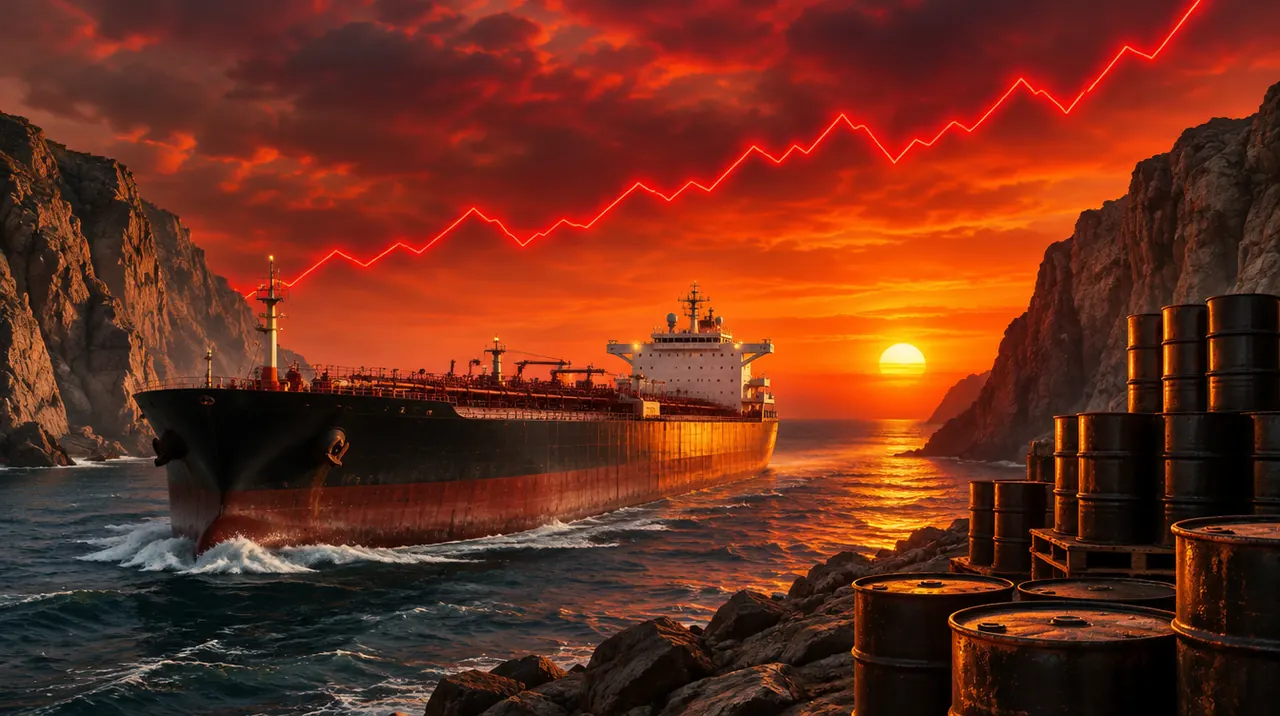
This post explains what has happened so far, why a war thousands of kilometres away moves the Nifty and the rupee, and how to follow it calmly on a chart.
Education only. For Indian indices Tradnexa shares a Bullish, Bearish or Neutral bias and never buy or sell calls, levels or targets.
The war in 60 seconds
| When | What happened |
|---|---|
| 28 Feb 2026 | The US and Israel strike Iran's nuclear, missile and military sites. Iran disrupts shipping through the Strait of Hormuz. |
| April | A short ceasefire pauses the fighting, then breaks down. |
| June | The US and Iran agree a 14-point memorandum to stop military operations and reopen Hormuz. |
| July to August | Attacks on ships and new strikes undermine the deal; by mid-August the memorandum is widely described as having fallen apart. |
| Early November | US strikes on air-defence sites on Qeshm Island, which President Trump describes as limited action, not a return to full war. |
| 8 November | Trump says restarting the war is "highly unlikely" if talks progress; the US also announces a task force aimed at Iran's land supply routes. |
Different outlets describe the situation differently: some call it an ongoing war, while the US side has called recent strikes "limited". What matters for markets is simpler: the risk to oil supply has not gone away.
Why the Strait of Hormuz matters so much
The Strait of Hormuz is a narrow sea passage between Iran and Oman. A large share of the world's seaborne oil passes through it. When ships there are attacked, mined or delayed, traders worry that less oil will reach buyers, and crude prices jump, often within minutes of a headline.
That is exactly what happened last week. Reports of tanker attacks pushed Brent crude (the global oil benchmark) to around $100 a barrel. Then, on Monday, 9 November, Brent opened lower, near $97 to $98, after Trump's comments about talks. Same war, same week, opposite moves: that is how headline-driven this market is.
How it reaches Indian markets
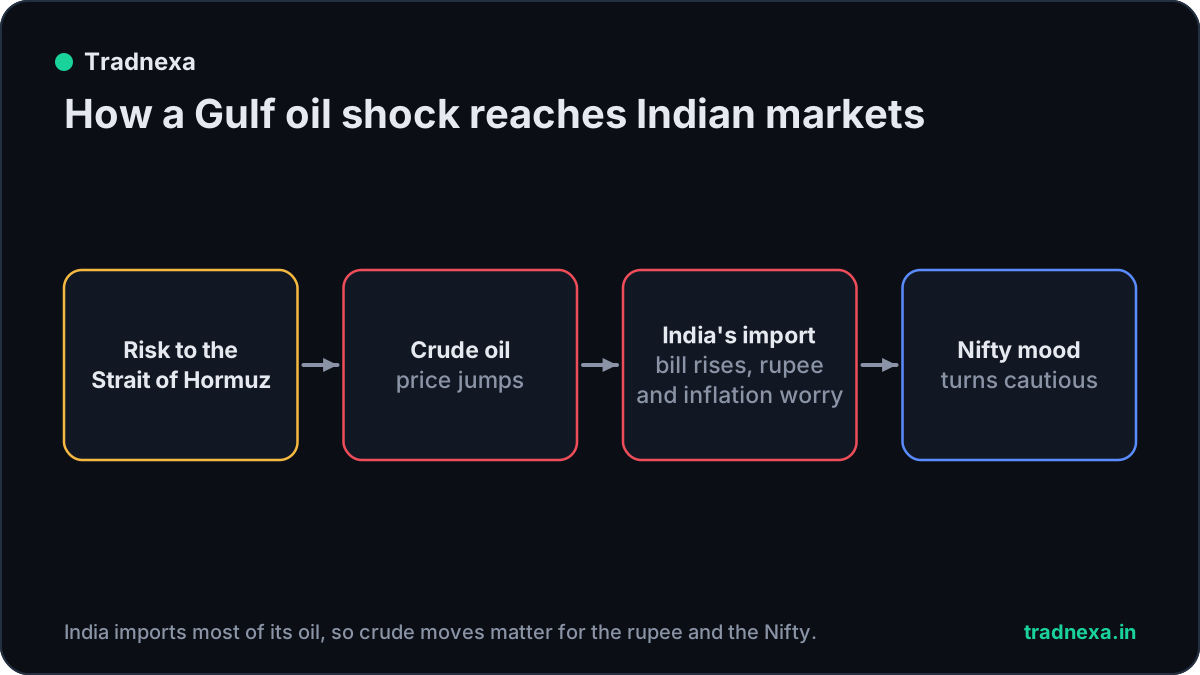
India imports most of the crude oil it uses, so a war around Hormuz reaches India through a few clear channels.
1. Oil prices
Higher crude means a bigger import bill. It can push up fuel, transport and input costs, and it squeezes margins for sectors that use a lot of fuel, such as airlines, paints and chemicals.
2. The rupee
A bigger oil bill means India needs more dollars, which can weaken the rupee. Indian news outlets reported the rupee hitting record lows earlier in this conflict, when crude was high.
3. Inflation and interest rates
Costlier fuel can lift inflation. That matters for the Reserve Bank of India's interest rate decisions, and rates matter for bank stocks and borrowing costs everywhere.
4. Foreign investors
When global investors get nervous, they often pull money out of emerging markets, including India, and move it to safer places. Foreign selling usually hits the biggest index stocks first.
The opposite is also true. When tensions ease and crude falls, these pressures relax. Our post on the Nifty's best week since 2021 noted that easing crude prices were one of the reasons behind that rally.
How Indian markets have reacted so far
Since February, Indian shares have tended to fall on days when the war escalated and oil spiked, and to recover when talks or ceasefires looked more likely. Earlier in the conflict, Indian media reported sharp single-day falls in the Sensex and Nifty, foreign selling, and pressure on oil-sensitive sectors, while defensive sectors such as IT and pharma held up better.
That pattern is the useful part for a learner: the market reacts to changes in expectations, not to the war itself. A headline that lowers the risk to oil supply can lift the market even while the conflict continues.
How to follow it on a chart, calmly
Watch crude next to the Nifty
Open a crude chart and a Nifty chart side by side. On days of big oil moves, you will often see the Nifty move the other way. Seeing it yourself is better than any opinion.
Use the daily or weekly view
War headlines create sharp moves on 1-minute and 5-minute charts that often reverse within hours. The daily and weekly charts show whether the bigger trend has actually changed.
Check the bias, not the noise
Institutional NexaScan on Tradnexa shows the NIFTY, BANK NIFTY and SENSEX bias with its reasons (for example: above or below the day's open and yesterday's close, and how many of the index's own stocks are rising), plus the Put-Call Ratio. It describes what the market is doing now. It doesn't predict it.
Respect the gaps
Big news often arrives overnight or at weekends, so the market can open far from Friday's close. If you are new to options and open interest, read our guide to open interest before trading around big events.
What to watch this week
- Talks: any sign of progress, or a breakdown, in the US-Iran negotiations, with Qatar reported to be helping exchange proposals.
- Hormuz shipping: reports of tanker attacks or of flows returning to normal.
- Brent crude: whether it holds near $100 or moves away from it.
- The rupee: a weaker rupee usually travels with higher oil.
- The economic calendar: inflation data and central bank comments that could change the rate outlook.
The situation changes quickly, and details in this post may change as more news comes in.
FAQ
Why does the US-Iran war affect the Nifty?
India imports most of its crude oil. The war threatens oil shipping through the Strait of Hormuz, so it pushes crude prices around. Higher oil can weaken the rupee, lift inflation and make foreign investors cautious, and those effects show up in the Nifty and Sensex.
What is the Strait of Hormuz?
A narrow sea passage between Iran and Oman that a large share of the world's seaborne oil passes through. Attacks or delays there quickly move crude prices.
Is the war over?
Not clearly. A memorandum agreed in June did not hold, and there were new US strikes in early November. On 8 November President Trump said restarting full war was highly unlikely while talks progress, but the situation can change quickly.
Why did oil fall on Monday, 9 November?
Brent opened lower after President Trump said new strikes on Iran were unlikely if talks progressed, which reduced fears about oil supply in the short term.
How can I follow the market's mood without guessing?
Watch the daily chart of the Nifty alongside crude, and check the index bias with its reasons on Institutional NexaScan. Bias describes what the market is doing now; it is not a prediction or advice.
Sources
- Britannica: 2026 Iran war
- Wikipedia: 2026 Iran war
- The National: US and Iran agree peace framework and set plan to reopen Strait of Hormuz (15 Jun 2026)
- Al Jazeera: US-Iran Memorandum of Understanding expires, how and why it fell apart (17 Aug 2026)
- Arms Control Association: Fighting mars US-Iranian pledges to end war
- Gulf News: Trump confirms US strikes on Iran's Qeshm Island
- SAN: US strikes Iran's Qeshm Island as Trump weighs deal
- CNBC: Trump says restarting Iran war highly unlikely (8 Nov 2026)
- Al Jazeera: US launches task force to disrupt Iran's land-based supply routes (8 Nov 2026)
- CBS News: Live updates, Iran downplays new US task force
- Nation Thailand: Brent falls on 9 November as Trump calls new Iran strikes unlikely
- NewsBytes: Brent crude passes $100 amid Strait of Hormuz attacks
- Business Today: US-Iran war impact on Sensex, Nifty, rupee and oil (20 Apr 2026)
- Outlook Business: Sensex slips as Iran fears and record low rupee hit sentiment
For education only. Not investment advice. Tradnexa is not a SEBI-registered investment adviser or research analyst. Trading in crypto, futures and options carries a high risk of loss; past moves don't predict future ones. Read our risk disclaimer.