India's inflation crosses 6%: will the RBI raise rates again, and what it means for Nifty
Retail inflation hit 6.09% in October, above the RBI's 6% limit, and banks pulled Nifty lower. What it means for rates, EMIs and Bank Nifty.
In this article
India's retail inflation has crossed the Reserve Bank of India's comfort zone for the first time in about two years. Official data released on 12 November showed consumer prices rose 6.09% in October from a year earlier, above the RBI's upper limit of 6%. On Friday morning, banks and financial stocks pulled Sensex and Nifty lower as traders started asking one question: will the RBI raise interest rates again in December?
What the inflation number says
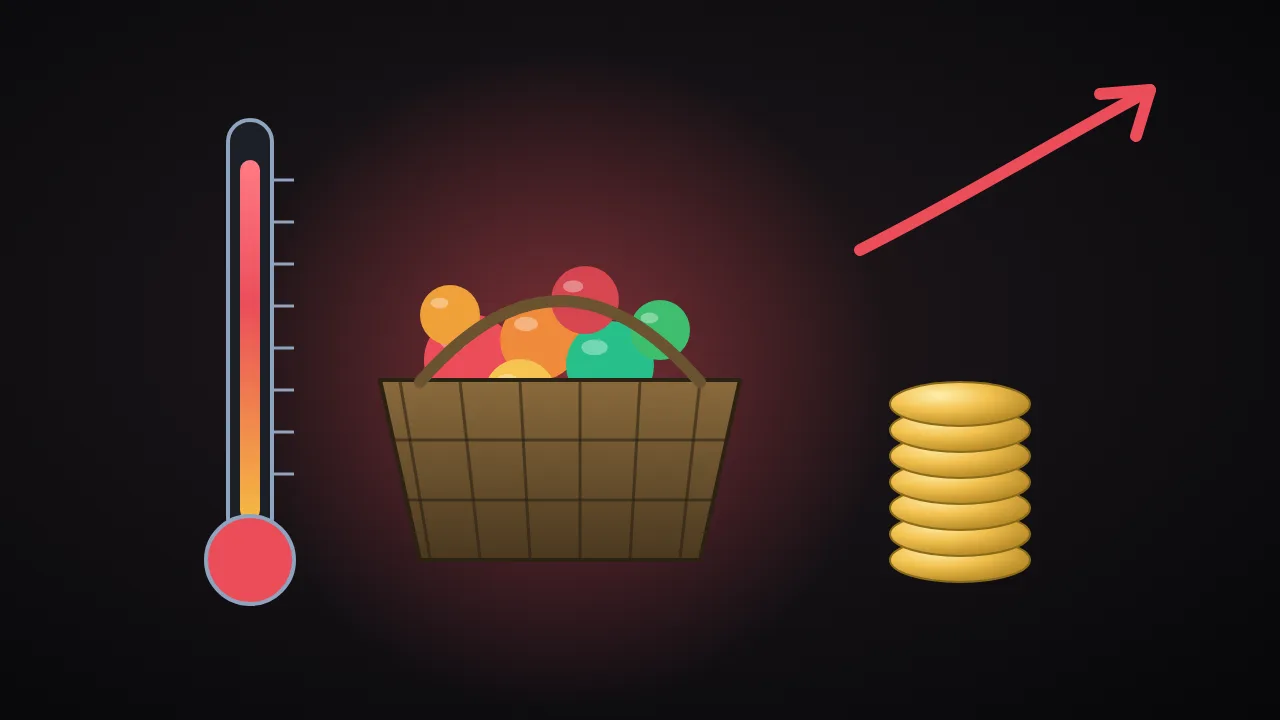
Retail inflation (also called CPI inflation) measures how much more a typical household pays for the same basket of things, such as food, fuel, rent and clothes, compared with a year ago.
| Month | Retail inflation |
|---|---|
| September 2026 | about 5.5% |
| October 2026 | 6.09% |
| RBI's target | 4% (comfort band 2% to 6%) |
Two things stand out in the reports:
- Food led the jump. Food prices rose faster than everything else, and several economists said the rise was spread across most of the basket, not just one item.
- It has been climbing all year. Inflation started 2026 below 3% and has gone up almost every month since.
When inflation stays above 6%, the RBI is expected to act, because keeping prices stable is its main job.
What the RBI has already done
The RBI's Monetary Policy Committee raised the repo rate by 0.25 percentage points to 5.50% in October, its first increase in more than three years, and said it would follow a path of "calibrated tightening".
The repo rate is the interest rate at which the RBI lends money to banks. When it goes up, banks usually raise their own lending rates, so home loans, car loans and business loans get more expensive.
With October's inflation above 6%, many economists now expect another hike at the December policy meeting. Nothing is decided until the RBI announces it, so treat this as an expectation, not a fact.
Why banks fell first
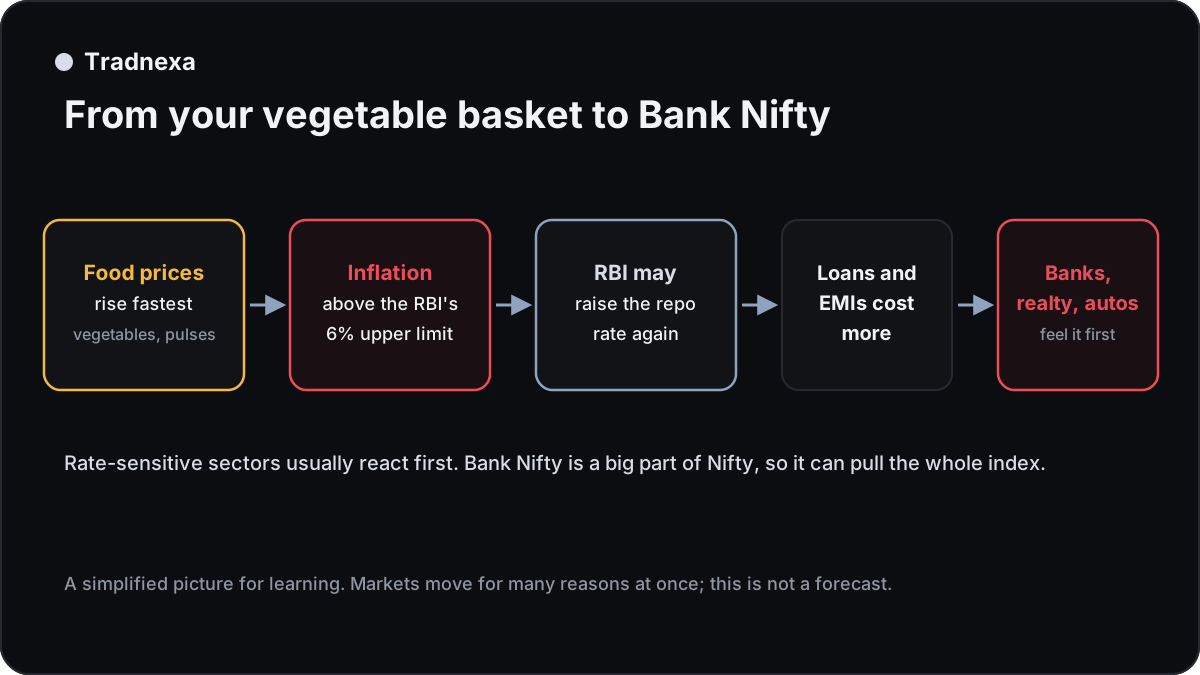
On Friday, financial stocks were the main drag. Bank Nifty slipped close to 1% in morning trade, and HDFC Bank was among the top losers on the Nifty, according to market reports. Nifty traded lower too, though by less than the bank index.
Why do banks react first to inflation news?
- Loans can slow down. Costlier loans can mean fewer people and companies borrow, which slows banks' growth.
- Bond values fall. Banks hold many government bonds. When rates are expected to rise, the price of existing bonds falls, which can hit bank profits.
- Bank Nifty is heavy in Nifty. Banks and financial companies make up a large part of the Nifty 50, so when they fall, the whole index feels it.
This came right after a strong run. Earlier this week Bank Nifty was within about 1% of its record high, which we covered in our post on Bank Nifty near its all-time high. After a rally like that, traders often take some profit when bad news arrives.
What it means for you
If you have a loan: most new home loans in India are linked to the repo rate. If the RBI raises rates again, your EMI can rise, or your loan tenure can get longer, usually from the next reset date.
If you trade Indian markets: the overall bias for rate-sensitive sectors (banks, realty, autos) is cautious (neutral to bearish) until the December policy. Sectors like IT, which earn in dollars, often react differently.
This is a bias, not a call. Markets often price in a rate hike before it happens, and a move can turn quickly if inflation cools next month.
There's also a global link: US inflation also came in hot this week, which raised talk of a US rate hike too. We explained that in today's post on Nvidia and Bitcoin.
How to read it on a chart
If you open Bank Nifty or Nifty on Tradnexa charts:
- Watch the daily candles around the policy date. Big news days often bring long candles and higher volume.
- Check the Magic Line (an ATR-based trend line). If Bank Nifty closes below it, the trend has turned bearish; while it stays above, the uptrend is still in place.
- Watch the option chain. On NexaScan, the Option Chain tab shows whether traders are adding fresh put writing or call writing near the price and turns it into a simple bullish, bearish or neutral bias.
What to watch next
- The RBI's December policy decision and what the governor says about inflation.
- November's inflation number, due in mid-December. A drop back below 6% would ease pressure on rates.
- Food prices, especially vegetables, which drove October's jump.
- Foreign investor (FII) flows into Indian shares; read our FII and DII data explainer to follow them.
FAQ
What is India's latest inflation rate?
Retail (CPI) inflation was 6.09% in October 2026, up from about 5.5% in September and above the RBI's upper limit of 6%. Food prices rose the most.
Will the RBI raise the repo rate in December?
Many economists expect another 0.25 percentage point hike after October's number, but the RBI only decides at its policy meeting. The repo rate is 5.50% after October's hike.
Why did Bank Nifty fall after the inflation data?
Higher rates can slow loan growth and lower the value of the bonds banks hold. Banks are also a big part of Nifty, so their fall pulled the whole index down.
Will my home loan EMI go up?
If your loan is linked to the repo rate and the RBI raises rates again, your EMI or loan tenure can increase from the next reset date. Check with your bank for your exact terms.
Is this a good time to buy bank stocks?
We don't give buy or sell advice. Watch the RBI's December decision, the next inflation number and how bank stocks behave on the chart, and decide with your own plan.
Sources
- Down To Earth: India's retail inflation hits two-year high of 6.09% amid rising food prices (12 Nov 2026)
- Business Today: Retail inflation hits two year high of 6.09% in October, breaches RBI's 6% limit; December rate hike likely (12 Nov 2026)
- ThePrint: India's October retail inflation breaches RBI's 6% ceiling, odds of December repo rate hike rise (12 Nov 2026)
- Forbes India: October retail inflation climbs to 6.09%, breaching RBI's tolerance ceiling (12 Nov 2026)
- SCC Online: RBI hikes repo rate by 25 bps to 5.50% (9 Oct 2026)
- PhonePe Invest: RBI MPC meeting October 2026, repo rate hiked to 5.5%, stance shifts to calibrated tightening
- HDFC Sky: Sensex falls 289 points, Nifty slips as inflation weighs, financials drag (13 Nov 2026)
- Equitymaster: Sensex today trades lower, Nifty below 25,250, HDFC Bank and Titan top losers (13 Nov 2026)
- Business Standard: Stock Market LIVE, Sensex at day's low, Nifty Bank down 1% (13 Nov 2026)
For education only. Not investment advice. Tradnexa is not a SEBI-registered investment adviser or research analyst. Trading in crypto, futures and options carries a high risk of loss; past moves don't predict future ones. Read our risk disclaimer.